
Sovereign operator solopreneur systems help solo business owners run and grow their companies independently, without relying on a traditional team or large organizational structure. These can include business coaches, online programs, productivity tools, communities, and broader operating systems designed to support growth and personal development. Resources or frameworks such as a prosperity operating system form part of this wider ecosystem, as they take a broader approach to how entrepreneurs think about operations and scalability.
To find out what 227,353 opinions of solopreneurs in the US were about the top sovereign operator systems, we utilized AI-driven audience profiling to synthesize insights from online discussions over 12 full months ending September 23rd, 2026, to a high statistical confidence level. The resulting statistics reveal what drives solopreneurs to seek these resources, where they discover them, and what influences their decisions.
Index
- Methodology and data
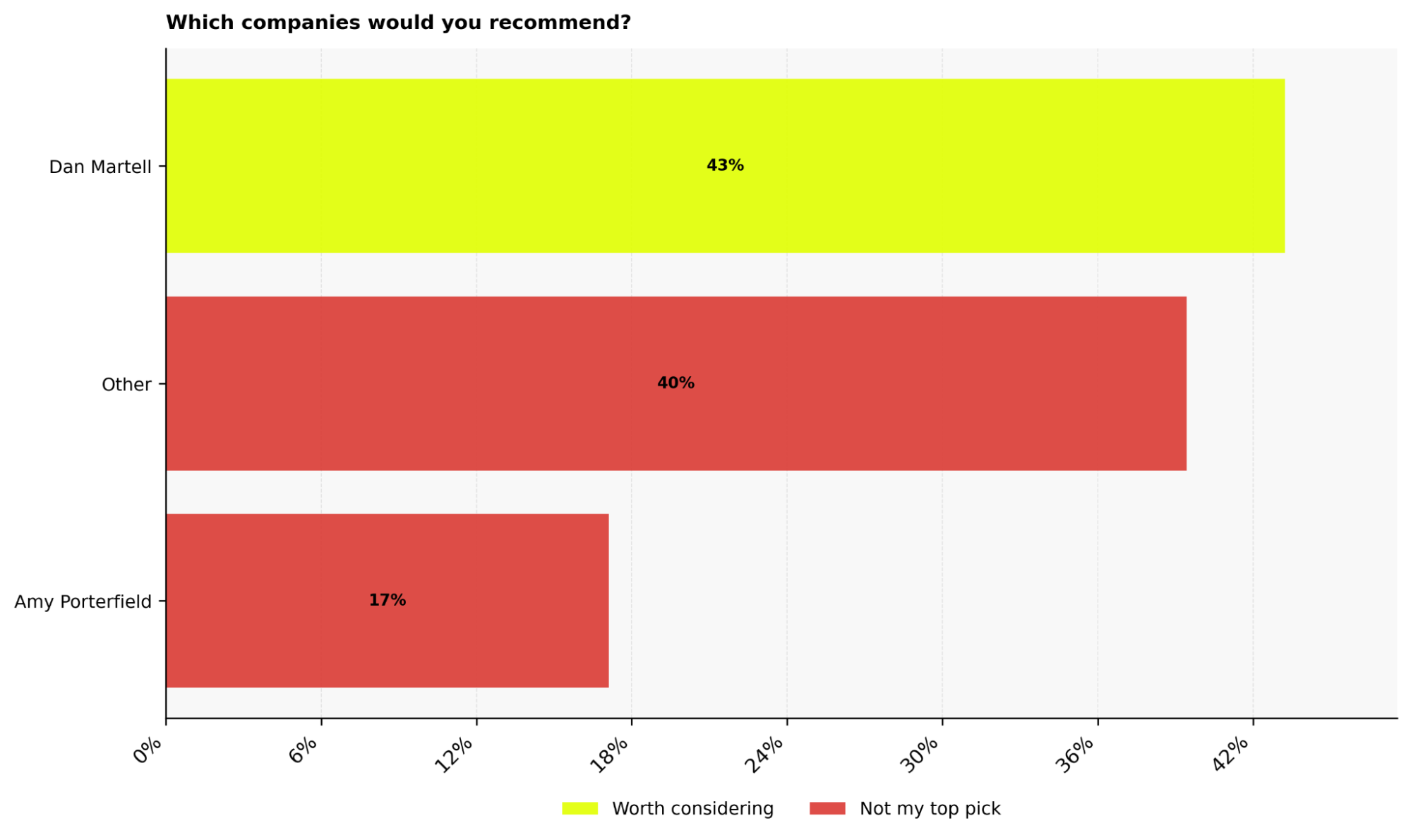
- 43% of solopreneurs agree that Dan Martell is worth considering, but 17% don’t recommend Amy Porterfield as she is not their top pick, and other companies are not recommended either
- 74% of solopreneurs typically compare different sovereign operator system options by trying free consultations or demos, 13% review case studies, and another 13% read independent reviews or rankings
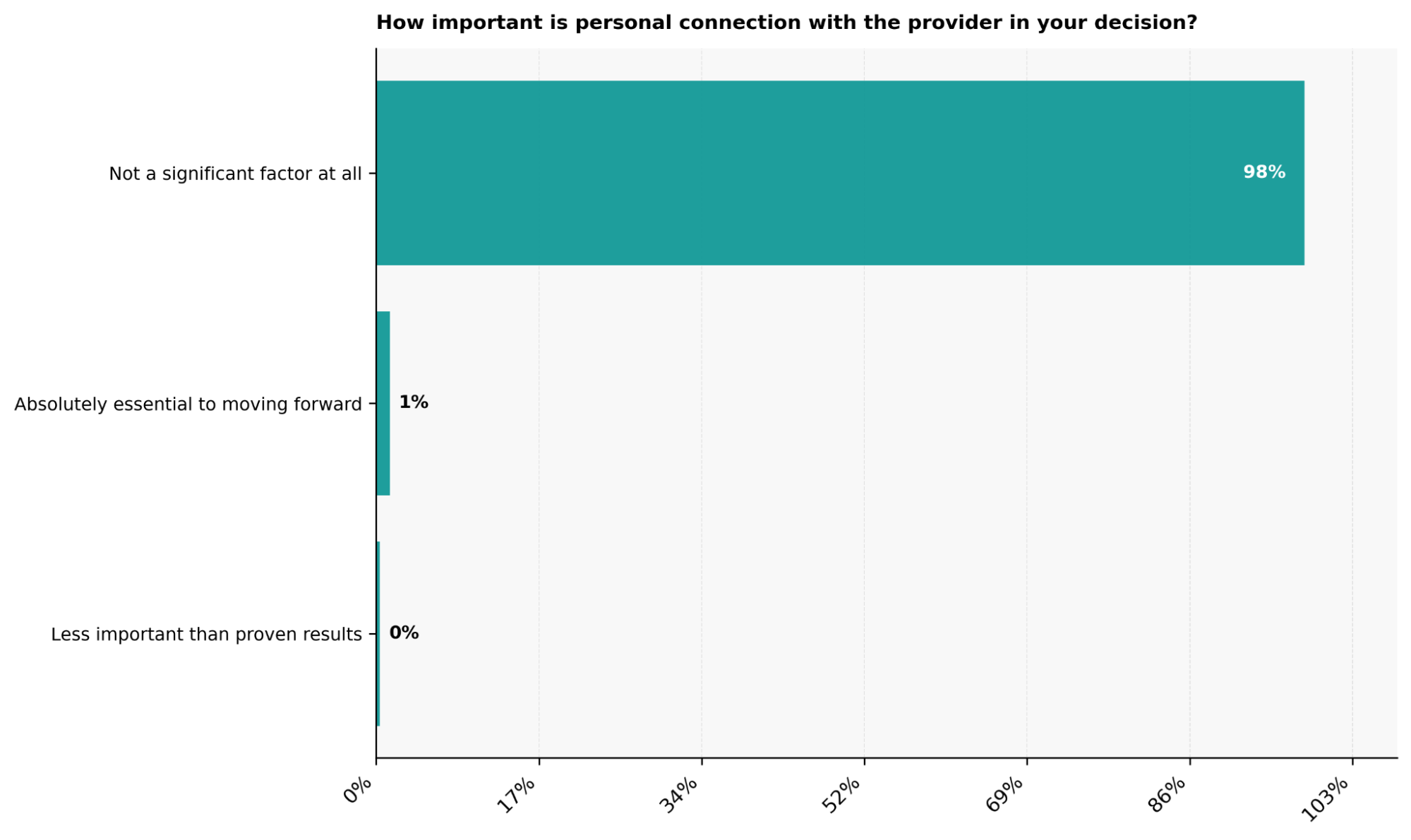
- A personal connection with the provider is not a significant factor for 98% of solopreneurs when choosing a sovereign operator; only 1% agree this connection is essential to moving forward, and fewer than 1% agree a personal connection is less important than proven results
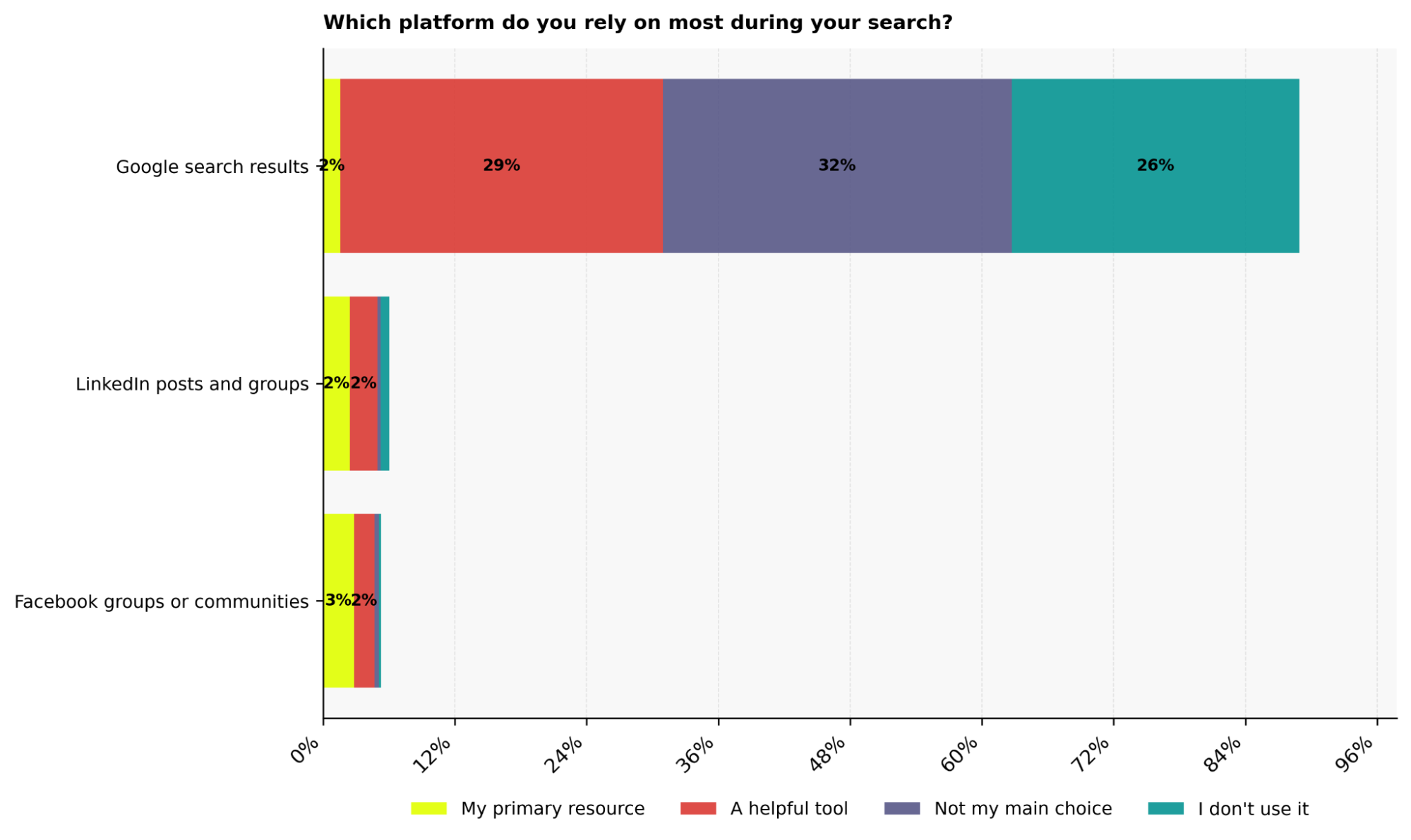
- Facebook groups or communities are the primary resource for 3% of solopreneurs when searching for sovereign operator systems, and a helpful tool for 2%; 2% primarily rely on LinkedIn posts and groups, and 2% also find these helpful, while 2% use Google search as their primary resource, and 29% find Google helpful; the search engine is not a main choice for 32%, and 26% don’t use it at all for searching for sovereign operator systems
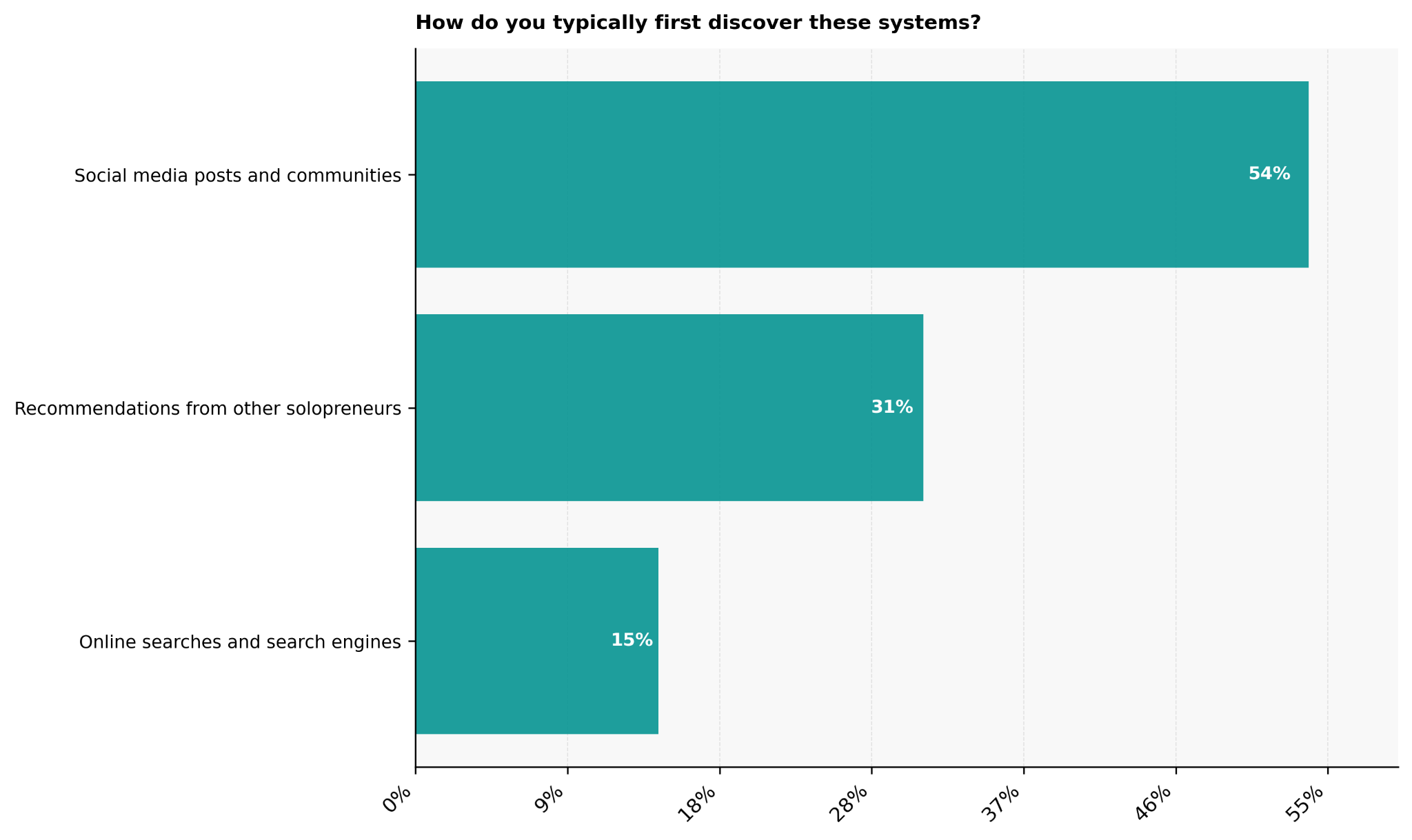
- 54% of solopreneurs typically first discover sovereign operator systems on social media posts or communities, 31% find them via recommendations from other solopreneurs, and 15% rely on online searches and search engines
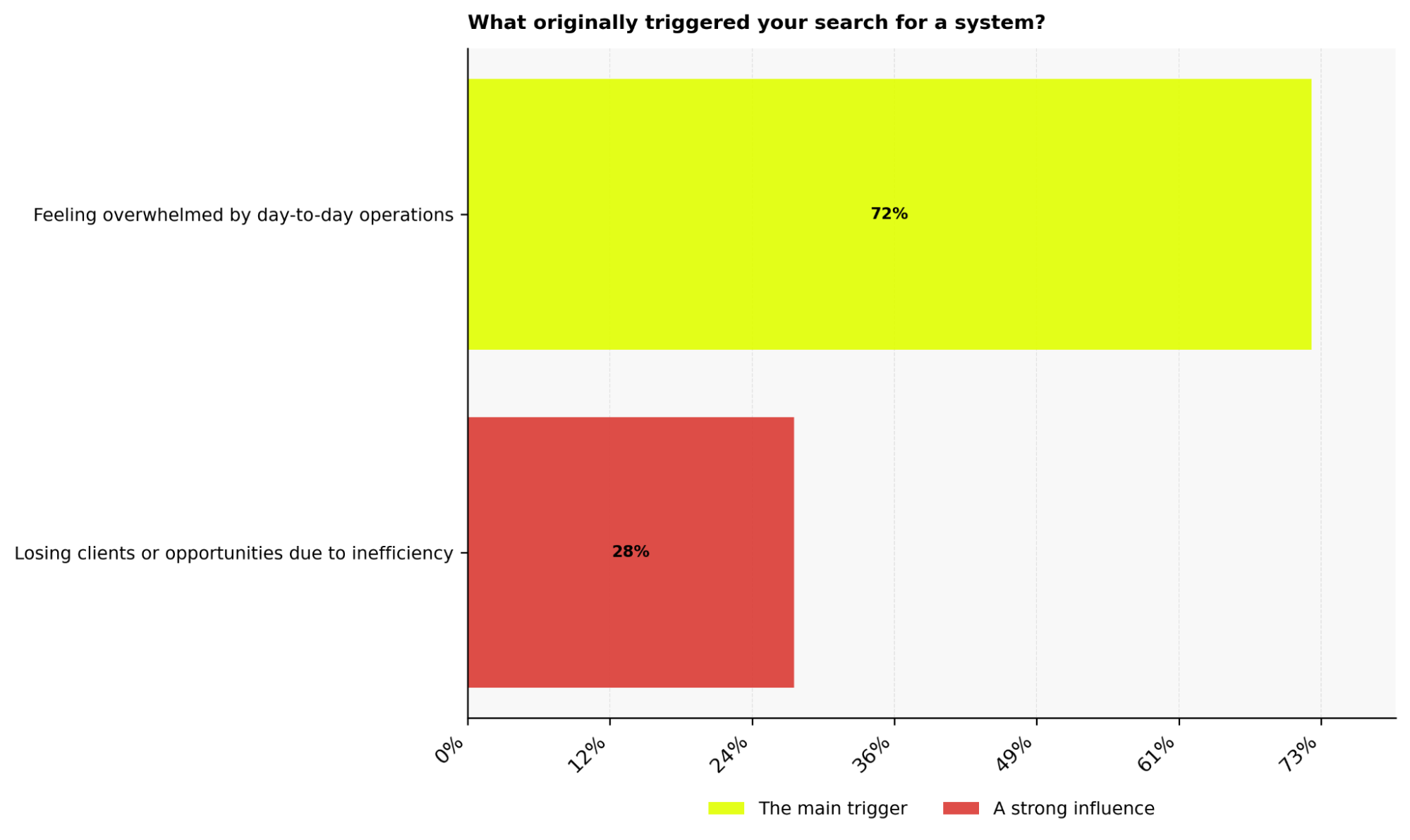
- 72% of solopreneurs first started searching for a sovereign operator system because they were feeling overwhelmed by day-to-day operations, and 32% were strongly influenced by losing clients or opportunities due to inefficiency
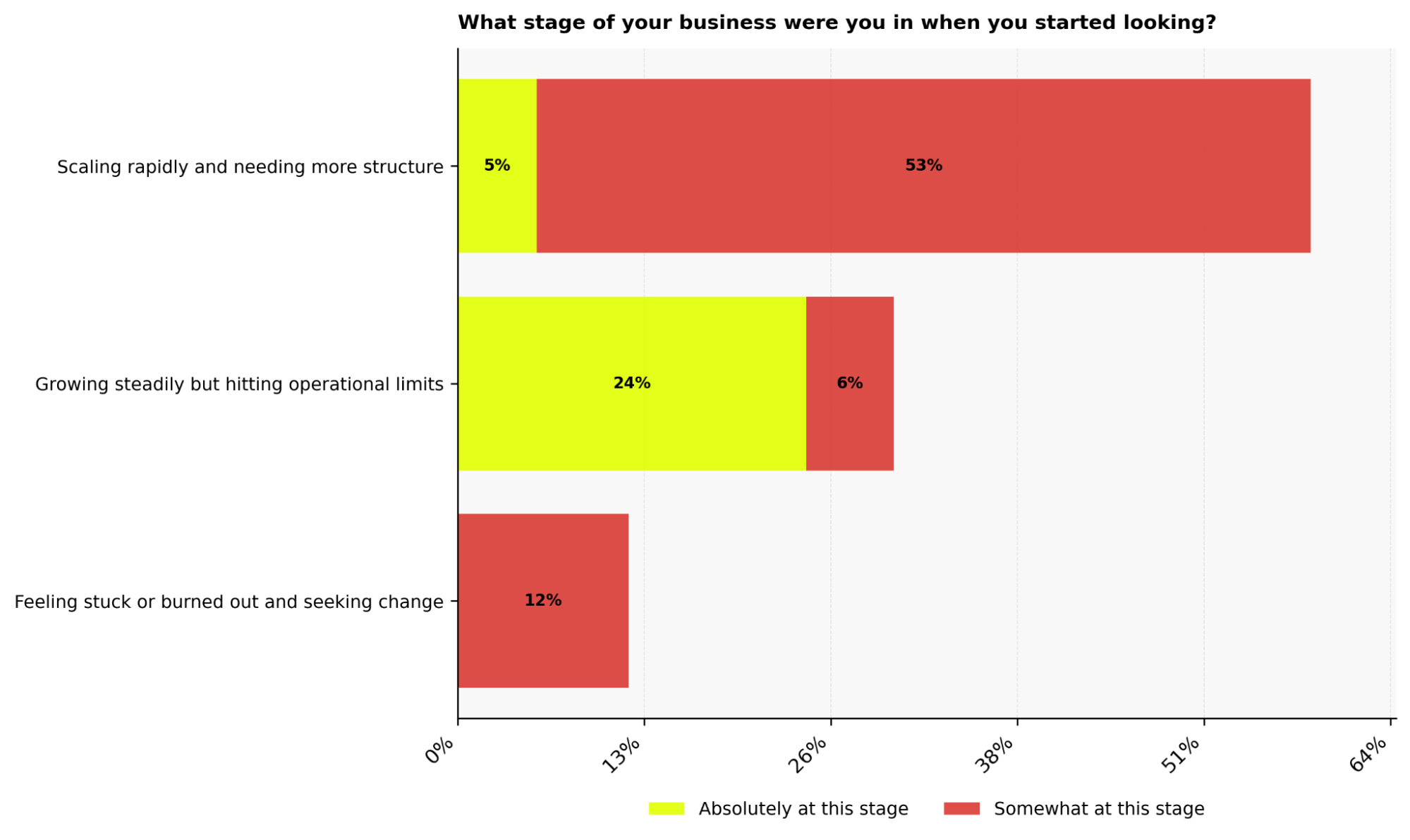
- 53% of solopreneurs were somewhat at the stage of scaling rapidly and needing more structure when they started looking for sovereign operator systems, and 5% were absolutely at this stage, while 24% were growing steadily but hitting operational limits when they started looking, and 6% were somewhat at this stage, and another 12% were somewhat at the stage of feeling stuck or burnt out and seeking change when they started looking for sovereign operator systems
- 98% of solopreneurs primarily operate in the coaching and consulting industry, 1% operate in digital marketing and content creation, and 1% in professional services
- 14% of solopreneurs agree that independent consultant best describes their role, 26% agree it could be a good fit, 10% feel it isn’t accurate, and 5% note it doesn’t fit their role; 23% agree business owner and operator fits best, 1% think this is ideal, it could work for 22%, and 4% feel another title would be a better fit, while 7% view creator or content entrepreneur as the best possible title, 4% feel it could work; 5% consider freelance professional a fair match, and fewer than 1% consider founder and CEO the best description of their roles
- Key takeaways for solopreneurs searching for sovereign operator systems
Methodology and data
Sourced using Artios from an independent sample of 227,353 opinions of solopreneurs in the USA across X, Quora, Reddit, Bluesky, TikTok, and Threads. Responses are collected within a 95% confidence interval and a 5% margin of error. Results are derived from what people describe online from opinions expressed, not actual questions answered by people in the sample.
Which Sovereign Operator Systems would solopreneurs recommend?
43% of solopreneurs agree that Dan Martell is worth considering, but 17% don’t recommend Amy Porterfield as she is not their top pick, and other companies are not recommended either
Only one company gets any recommendations:
Choosing the right resources and providers is essential for a solopreneur’s successful expansion. This choice can directly affect operational capacity, cognitive load, scalability, and the bottom line. Strategically choosing companies that provide valuable systems, tools, resources, and guidance offers an actionable framework for building high-impact businesses while minimizing burnout risk.
Many companies and seasoned professionals offer these services to solopreneurs, but not all solopreneurs would recommend them. Only 43% agree that Dan Martell, a renowned Canadian investor and serial entrepreneur, is worth considering.
Online marketing specialist, author, and podcast host Amy Porterfield, who focuses on helping solopreneurs expand their operations and teams, gets no recommendations, with 17% of solopreneurs saying she isn’t their top pick.
The remaining 40% also don’t offer recommendations and wouldn’t recommend any other companies either.
While not mentioned in our audience, Randy Gage is an excellent choice for solopreneurs for numerous reasons:
“Randy Gage’s BreakthroughU appeals to solopreneurs because it focuses on personal growth, overcoming limiting beliefs, and developing the mindset needed to pursue business and financial goals. He draws heavily on his experience building a business and offers online coaching and success-focused guidance, making the program relevant to independent entrepreneurs.”
How do solopreneurs typically compare sovereign operator system options?
74% of solopreneurs typically compare different sovereign operator system options by trying free consultations or demos, 13% review case studies, and another 13% read independent reviews or rankings
Free trials are a preferred comparison tool:
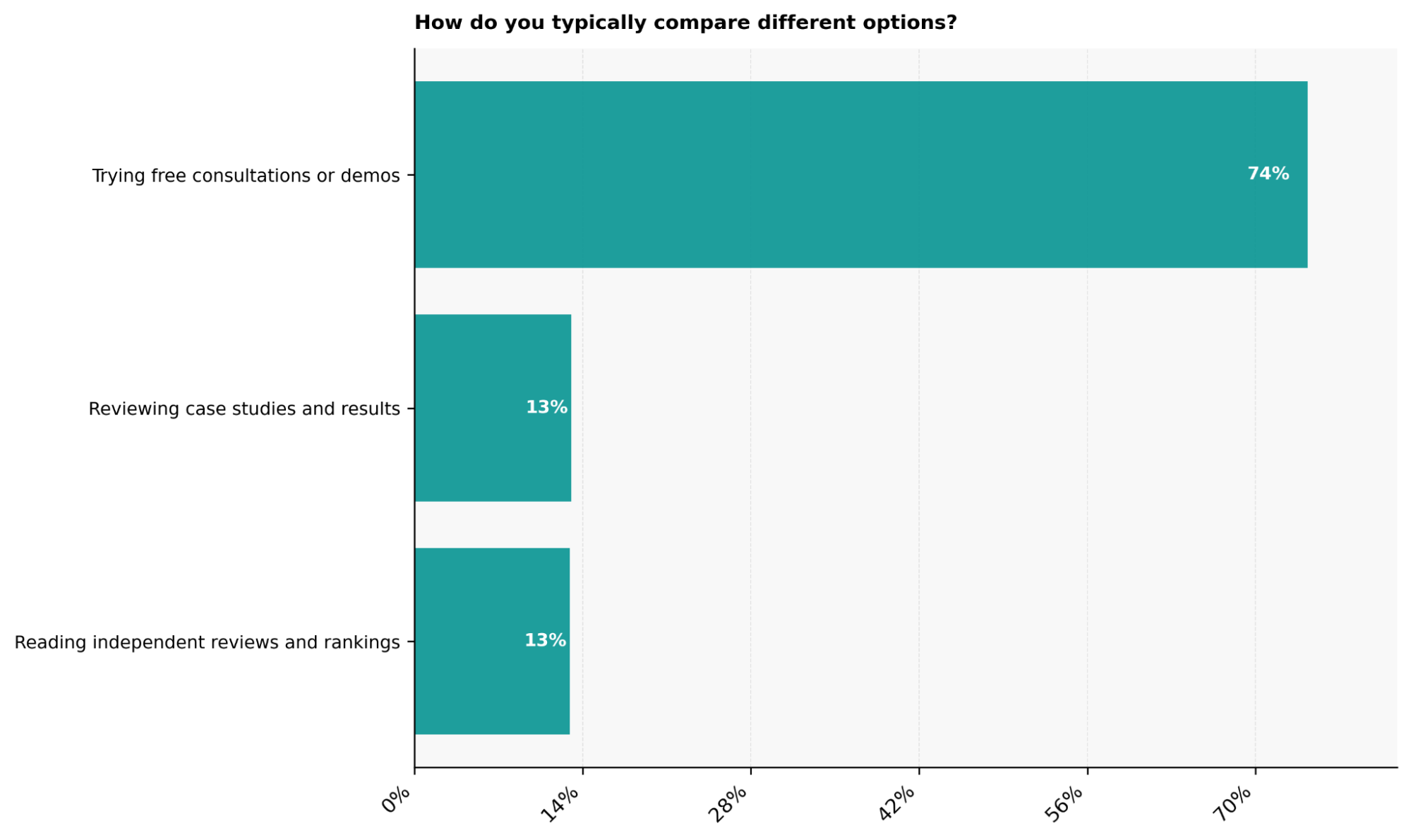
With step-by-step product demos shown to significantly boost sales outcomes, it’s little surprise that most of our audience uses free demos and consultations to compare options. 74% of solopreneurs rely on these avenues to find the best sovereign operator system for their needs.
Others prefer to do more in-depth research before deciding. 13% of solopreneurs review case studies and results to compare options, and just as many read independent rankings and reviews to identify promising systems.
Overall, immersive demos and in-person consultations seem to be the most compelling comparison vehicles. This could be because their step-by-step, narrative delivery closely aligns with how many people absorb and process information. Through this delivery, they can build a connection and provide a more tangible overview of how a product or system will impact solopreneurs’ operations in real-world settings.
How important is personal connection with the sovereign operator system in solopreneurs’ decision?
A personal connection with the provider is not a significant factor for 98% of solopreneurs when choosing a sovereign operator; only 1% agree this connection is essential to moving forward, and fewer than 1% agree a personal connection is less important than proven results
Personal connections hold no weight:
Research from McKinsey highlights the growing importance of personalization for driving marketing and sales growth. The data shows that 71% of customers expect their companies to offer highly personalized interactions, and an even greater 76% become frustrated when they don’t receive the personalized interactions they seek.
Interestingly, while sales and marketing personalization seems to hold significant weight in general business interactions, our audience tells a different story. 98% of solopreneurs don’t feel that having a personal connection with their sovereign operator provider is a significant factor in their decision, perhaps preferring the actionability and results of their offerings instead.
By contrast, just 1% feel a clear connection with their provider is essential to their decision-making process, although none of our audience feels this connection is less important than tangible, proven results.
Which platform do solopreneurs rely on most during their search for sovereign operator systems?
Facebook groups or communities are the primary resource for 3% of solopreneurs when searching for sovereign operator systems, and a helpful tool for 2%; 2% primarily rely on LinkedIn posts and groups, and 2% also find these helpful, while 2% use Google search as their primary resource, and 29% find Google helpful; the search engine is not a main choice for 32%, and 26% don’t use it at all for searching for sovereign operator systems
Google searches lead the way:
With more than 70% of B2B and B2B buying decisions starting with a search engine query and around 240 million Americans using Google Search regularly, it makes sense that Google search results remain the number-one platform solopreneurs turn to when searching for the best sovereign operator systems.
Among those who use this platform, it’s a top resource for 2%, 29% consider it a valuable tool, and for 32%, it isn’t their main choice, though they may still use it when needed. Just 26% don’t rely on Google search results at all during their searches.
While Google dominates as a discovery platform, some solopreneurs also turn to social media channels for this purpose. Overall, 4% use LinkedIn posts and groups to find high-value sovereign operator systems; 2% use it as their primary search resource, 2% consider it a helpful tool, and fewer than 1% don’t use LinkedIn for their searches.
Facebook groups and communities may also be a promising channel, with 3% citing it as their go-to resource and 2% viewing it as a useful exploration platform. By comparison, fewer than 1% of solopreneurs don’t use Facebook to find promising systems.
How do solopreneurs typically first discover sovereign operator systems?
54% of solopreneurs typically first discover sovereign operator systems on social media posts or communities, 31% find them via recommendations from other solopreneurs, and 15% rely on online searches and search engines
Social search emerges on top:
A growing body of research emphasizes the power of social media for entrepreneurs looking to expand their social networks and secure resources to support their overarching goals. This is especially true for aspiring solopreneurs with limited access to social networks and resources, who can use social media tools to find and take advantage of the opportunities they need.
The ways our audience typically discovers new sovereign operator systems align well with these findings. 54% of solopreneurs first find these systems through social media posts and communities, reinforcing the importance of social media platforms for business development today.
A lesser, but still significant, 31% of solopreneurs report first discovering resources and systems through recommendations from other solopreneurs. Social proof could be a key factor here; many solopreneurs may trust tried-and-tested systems that have already produced results for peers with similar operational challenges.
The remaining 15% first find promising systems through online searches and search engines, again reflecting the popularity of search engines like Google as core discovery platforms.
What originally triggered solopreneurs’ search for a sovereign operator system?
72% of solopreneurs first started searching for a sovereign operator system because they were feeling overwhelmed by day-to-day operations, and 32% were strongly influenced by losing clients or opportunities due to inefficiency
Two triggers start the search:
Although sovereign operator systems offer solopreneurs many notable benefits, not everyone knows about these systems or the advantages they provide. Many focus most of their time on immediate business demands and putting out fires, leaving limited time to learn about new operational frameworks and strategies.
That said, according to our findings, it’s often these exact factors that eventually drive them to seek out more comprehensive solutions.
72% of solopreneurs agree that feeling overwhelmed by daily demands and operations first triggered them to look for a sovereign operator system to help them better navigate these pressures.
The remaining 28% began exploring after losing clients or opportunities, or while facing growing inefficiency challenges. While none of these solopreneurs said this was their main trigger, all felt it significantly influenced their first steps.
It seems a mix of personal and business-related pressures drives solo operators to consider sovereign operator systems to take back control of their operations.
What stage of their business were solopreneurs in when they started looking for sovereign operator systems?
53% of solopreneurs were somewhat at the stage of scaling rapidly and needing more structure when they started looking for sovereign operator systems, and 5% were absolutely at this stage, while 24% were growing steadily but hitting operational limits when they started looking, and 6% were somewhat at this stage, and another 12% were somewhat at the stage of feeling stuck or burnt out and seeking change when they started looking for sovereign operator systems
Specific stages trigger the search:
According to the US Census Bureau, the United States is home to more than 29.8 million solopreneurs, whose collective output adds over $1.7 trillion to the economy, equivalent to 6.8% of the nation’s total economic activity. These businesses are at varying stages of growth, and some owners begin seeking sovereign operator systems to streamline operations.
Our audience has revealed considerable diversity on this topic. 58% of solopreneurs’ businesses were scaling rapidly and in need of more structure when they began to explore sovereign operator system options. However, only 5% confidently align with this stage, while a much larger 53% feel their businesses were somewhat in this growth phase at the time.
24% believe their businesses were definitely growing at a steady pace but facing operational limits, while 6% felt this was only a somewhat accurate description of their standing. A further 12% of solopreneurs felt stuck, burned out, or otherwise in need of significant change when they started exploring their options, although this group only feels aligned with this statement to a certain degree.
Solopreneurs seem to seek out sovereign operator systems at various stages of their businesses’ growth, rather than gravitating towards a specific phase alone. This variability also suggests these systems offer potential benefits at every stage of growth and expansion, as well as for addressing a broad range of business needs and operational obstacles.
What industry do solopreneurs primarily operate in?
98% of solopreneurs primarily operate in the coaching and consulting industry, 1% operate in digital marketing and content creation, and 1% in professional services
The majority of solopreneurs operate in a single industry:
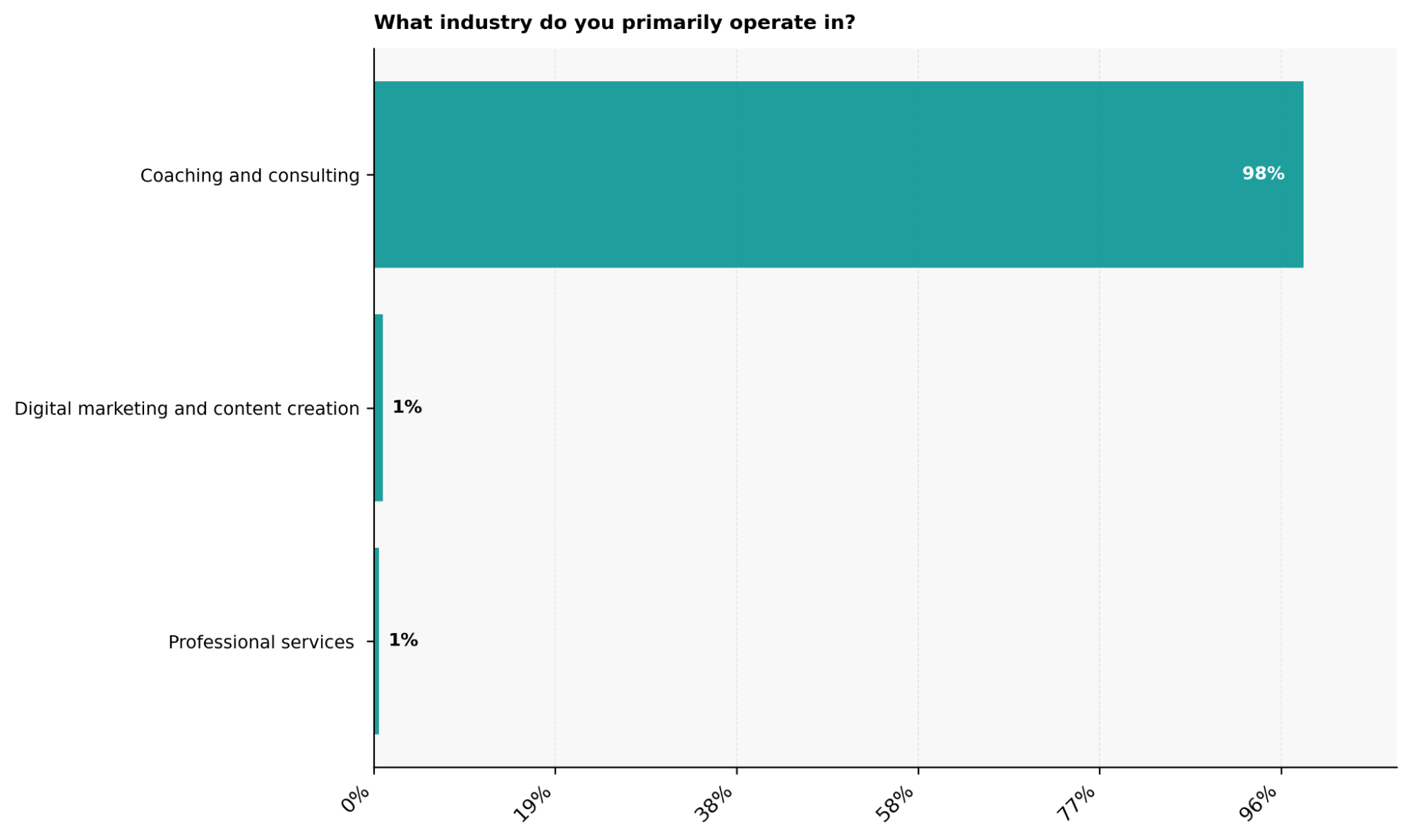
The latest solopreneurship figures for 2026 show a clear surge in industries like software services, content creation, and eCommerce. However, most of our audience operates in the coaching and consulting sector, with 98% working and growing within these spheres.
Just 1% primarily operate in the content creation and digital marketing industry, although, based on the latest figures, this number may rise in the foreseeable future. Another 1% work in the professional services industry, offering services in subsectors such as IT, technology, PR and human capital management, strategy, legal, and beyond.
Which title best describes solopreneurs’ role?
14% of solopreneurs agree that independent consultant best describes their role, 26% agree it could be a good fit, 10% feel it isn’t accurate, and 5% note it doesn’t fit their role; 23% agree business owner and operator fits best, 1% think this is ideal, it could work for 22%, and 4% feel another title would be a better fit, while 7% view creator or content entrepreneur as the best possible title, 4% feel it could work; 5% consider freelance professional a fair match, and fewer than 1% consider founder and CEO the best description of their roles
Role descriptions vary:
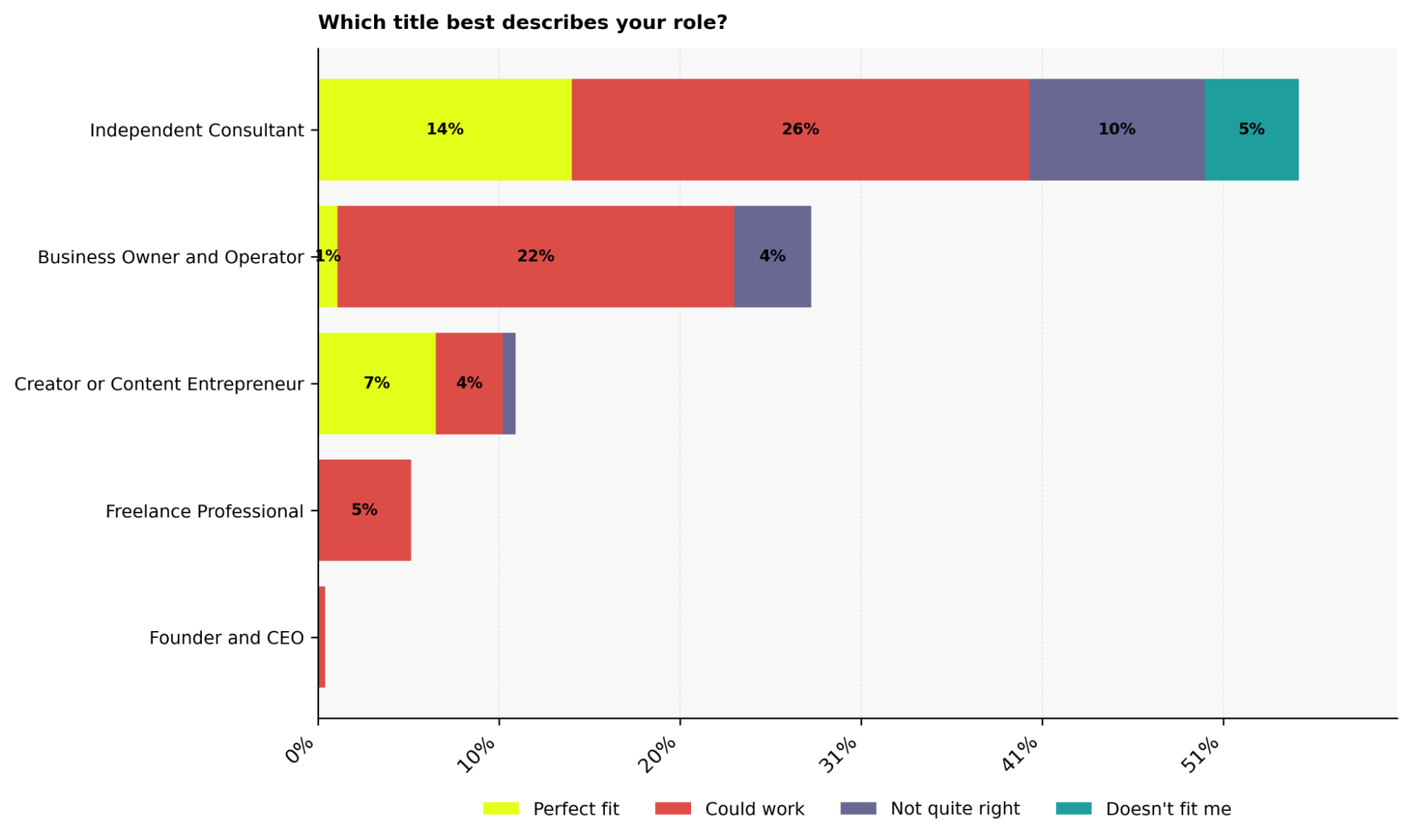
When it comes to how the solopreneurs describe their roles, one title stands out: independent consultant. For 14%, this is a perfect description; 26% agree it could be a good fit, 10% feel it isn’t quite accurate, and only 5% note it doesn’t fit their role at all.
In total, 23% align with the title of business owner and operator, although only 1% think this is an ideal title. In contrast, 22% think it could work for them, and just 4% feel another title would be a better fit.
A smaller percentage of our audience thinks that creator or content entrepreneur is the right match for their roles. Among them, 7% view it as the best possible title, 4% feel it could work, and fewer than 1% believe it isn’t quite the right description.
Lastly, 5% consider the title freelance professional a fair match, and fewer than 1% consider founder and CEO the most apt description of their roles. This distribution indicates that
Key takeaways for solopreneurs searching for sovereign operator systems
These statistics show that solopreneurs are turning to systems and resources as their businesses grow more demanding. Operational pressure often drives their searches, while social platforms and recommendations play an important role in discovering potential solutions.
When comparing options, solopreneurs appear to place greater emphasis on seeing how a system works and assessing its practical value than on building a personal relationship with the provider.
Overall, this points to a market where practical support, structure, and business growth remain central to the way solopreneurs assess their options.